The timepiece you wear on your wrist is more than just a functional instrument; it is often a blend of engineering, art, and sentimentality. Whether you own a complex mechanical marvel or a reliable quartz classic, your watch is subject to the inevitable wear and tear of daily life. Knowing the most common problems is the first step toward effective maintenance, saving you both time and money. While many issues require a certified professional, understanding the nature of a fault allows you to make informed decisions about its remedy. This comprehensive guide details the top ten common watch problems, offering insight into their causes and the professional watch repair solutions available to restore your cherished possession to its former glory.
1. The Dead or Depleted Battery in a Quartz Movement
The most frequent visitor to any workshop is the quartz watch with a completely stopped movement, a scenario that almost always points to a dead battery. Quartz timepieces, which rely on a battery to power the electronic circuit and stepper motor, have a power cell lifespan typically ranging from one to three years, depending on the caliber and the number of functions (like a chronograph) it powers. While a DIY swap might seem tempting, improper tools or handling can scratch the caseback, damage the delicate coil, or compromise the water resistance gasket. A professional watch repair service will not only replace the battery with a high-quality silver oxide cell but will also meticulously clean the battery contacts to prevent corrosion and, critically, test and reseal the case to ensure the watch’s water resistance is maintained, a step often overlooked in home attempts.
2. Compromised Water Resistance and Internal Moisture
Seeing condensation or fog under your watch crystal is a critical emergency that requires immediate attention; this visual cue signifies that the protective gaskets have failed and moisture has infiltrated the movement. This water can rapidly lead to rust, corrosion, and irreversible damage to metal components, especially in a mechanical caliber. The cause is usually degraded, cracked, or dried-out gaskets around the caseback, crown, or crystal, which lose their elasticity over time. The professional fix for this serious issue involves an immediate and complete movement overhaul- the watch is disassembled, all affected parts are dried and cleaned (often in an ultrasonic bath), rusted components are replaced, and the watch is reassembled with all-new gaskets before undergoing rigorous pressure testing to certify the restored water resistance. Delaying this crucial watch repair can turn a simple service into an expensive replacement of the entire movement.
3. Inaccurate Timekeeping (Running Fast or Slow)
A watch that is consistently losing or gaining significant time is a clear indication of a deeper issue within the regulating mechanism. For a mechanical watch, this often stems from dried-out or contaminated lubricating oils causing excessive friction, a magnetized hairspring causing coils to stick together, or an impact that has misaligned the delicate balance wheel. In a quartz watch, poor timekeeping can signal a dying battery or, less commonly, a failing circuit board or quartz crystal. To fix this, a horologist performing a comprehensive watch repair will use a timegrapher to analyze the movement’s performance (rate, amplitude, and beat error). The solution for a mechanical watch is a full service (cleaning, oiling, and regulation), while a quartz movement may require demagnetization or a complete replacement of the electronic circuit, ensuring optimal performance is restored.
4. Physical Damage to the Crystal (Scratches or Cracks)
The watch crystal, whether made of sapphire, mineral glass, or acrylic, is the primary protector of the dial and hands. Accidental impacts often result in scratches, chips, or, in the worst cases, a crack or shatter. While minor acrylic scratches can sometimes be polished out with specialized pastes, a deep gouge or crack in any material necessitates replacement. A cracked crystal is particularly dangerous as it compromises water resistance and can shed tiny, razor-sharp shards of glass into the movement, leading to catastrophic internal damage. The necessary watch repair involves carefully removing the damaged crystal, meticulous cleaning of the case and movement to remove any debris, and fitting a new crystal, often with new gaskets, to ensure the watch remains sealed and the movement is protected from external elements.
5. Issues with the Crown or Pushers (Stuck, Loose, or Broken)
The crown (used for winding and setting the time/date) and any pushers (used for chronograph functions) are external components that interface directly with the delicate internal mechanism, making them highly susceptible to damage. They can become stiff, stuck, or loose due to accumulated dirt, dried-out internal lubrication in the case tube, or accidental impact. For screw-down crowns, stripped threads are a common issue from cross-threading or improper use, severely compromising water resistance. A crucial part of routine watch repair is inspecting these components; the fix usually requires disassembling the crown and pusher system, thoroughly cleaning the components and case tube, re-lubricating the seals (gaskets), and potentially replacing the winding stem, crown, or pusher assembly if physical damage or thread stripping has occurred.
6. Loose, Detached, or Misaligned Hands or Indices
7. The Date Mechanism Malfunction
Many watches, from simple date models to complex perpetual calendars, rely on intricate gears and levers to advance the date wheel at midnight. A common malfunction occurs when the date fails to change, flips prematurely, or advances incorrectly. This can be caused by physical impact, but a frequent culprit is attempting to manually set the date during the ‘danger zone,’ typically between 9 PM and 3 AM, when the mechanism is already engaged. Forcing the calendar gears during this period can cause them to bend or break. The fix for this delicate issue requires a specialized watch repair technician to disassemble the date complication, replace any broken gears or springs, and ensure proper alignment and lubrication of the jumper spring and date wheel, a highly detailed process that demands precision.
8. Magnetism Affecting Accuracy
Magnetism is an invisible enemy, especially for mechanical watches, as it causes the steel hairspring to stick together. When the coils of the hairspring adhere to one another, the effective length of the spring is shortened, leading to a dramatic gain in time, sometimes minutes per day. Common culprits for magnetism include everyday items like cell phones, tablets, speaker magnets, and magnetic closures on bags or wallets. Luckily, this is one of the easier problems to solve. The required watch repair is a simple demagnetization process performed by a watchmaker using a specialized tool. The watch is placed on a demagnetizer, which effectively scrambles the magnetic field, instantly restoring the hairspring’s natural function and, consequently, the watch’s accurate timekeeping without the need for a full service.
9. Worn, Broken, or Damaged Watch Strap or Bracelet
While often overlooked as a mere accessory, the strap or bracelet is the part that connects the watch to your wrist, and its failure can lead to catastrophic damage if the watch is dropped. Wear and tear on leather straps, broken bracelet links, stretched metal from accumulated grime, or broken spring bars are all common issues. Furthermore, an improperly sized bracelet can be uncomfortable and cause damage over time. The watch repair solution here is often straightforward- for straps, a simple replacement is needed, which a professional can install with new spring bars. For metal bracelets, the fix may involve removing seized pins, replacing worn links or screws, or cleaning the bracelet in an ultrasonic bath to remove the dirt and grime that causes premature stretching, ensuring a secure and comfortable fit.
10. Dried-Out or Contaminated Lubricating Oils
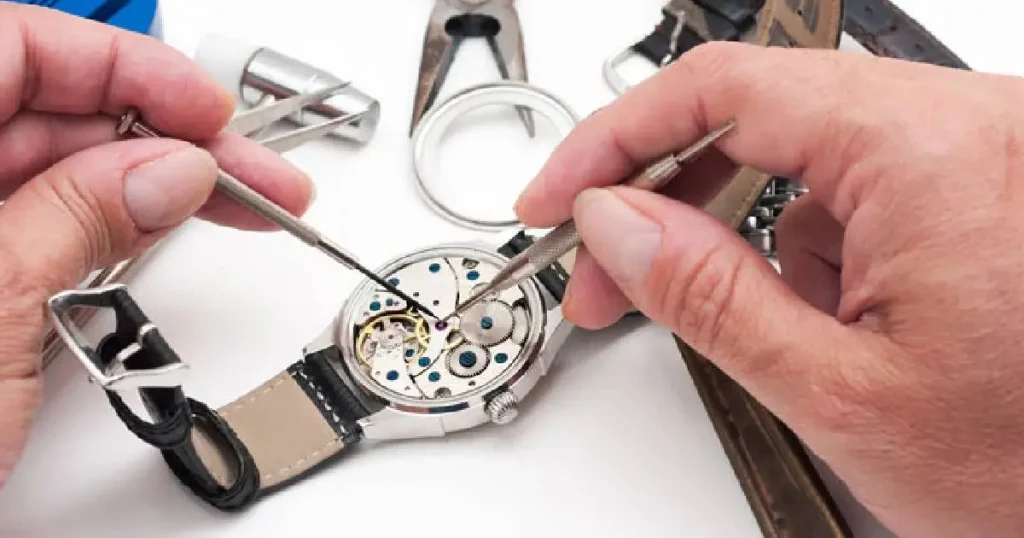
This issue is the silent killer of all mechanical watches and is the reason regular servicing is crucial. The movements of mechanical timepieces contain numerous minuscule friction points that require specialized, high-grade oils for smooth operation. Over a period of three to five years, these oils can dry up, evaporate, or become contaminated with dust and debris, leading to increased friction, greater wear on parts, and a loss of power reserve or stopping altogether. The only effective watch repair for a dry movement is a full overhaul- complete disassembly of the movement, ultrasonic cleaning of every single component, inspection for worn parts, careful reassembly, and the application of fresh, specialized lubricants to all friction points, thereby resetting the watch’s service life for another several years of reliable operation.
In conclusion, understanding these top ten watch repair issues empowers you as a timepiece owner. While simple steps like avoiding water, preventing hard impacts, and steering clear of magnetic fields can prolong your watch’s life, every mechanical and quartz watch will eventually require professional attention. The keyword ‘watch repair’ represents more than just a service; it is the commitment to precision and longevity that keeps your cherished watch ticking accurately for generations. Never hesitate to consult a qualified horologist—their expertise is the best insurance you have against a momentary lapse in time.